
Project
UNESCO General Conference in Samarkand: video, screens and interpretation
Within the general contractor’s team we ran session video and screen output, content on schedule and simultaneous interpretation receivers, from morning hand-out to overnight charging.
- days of the session, in the halls every day
- 15
- halls under our video direction
- 3
- cameras in the halls
- 9
- simultaneous interpretation receivers
- 600
Our figures for the whole session. The scale of the conference itself is in the passport below.
Passport
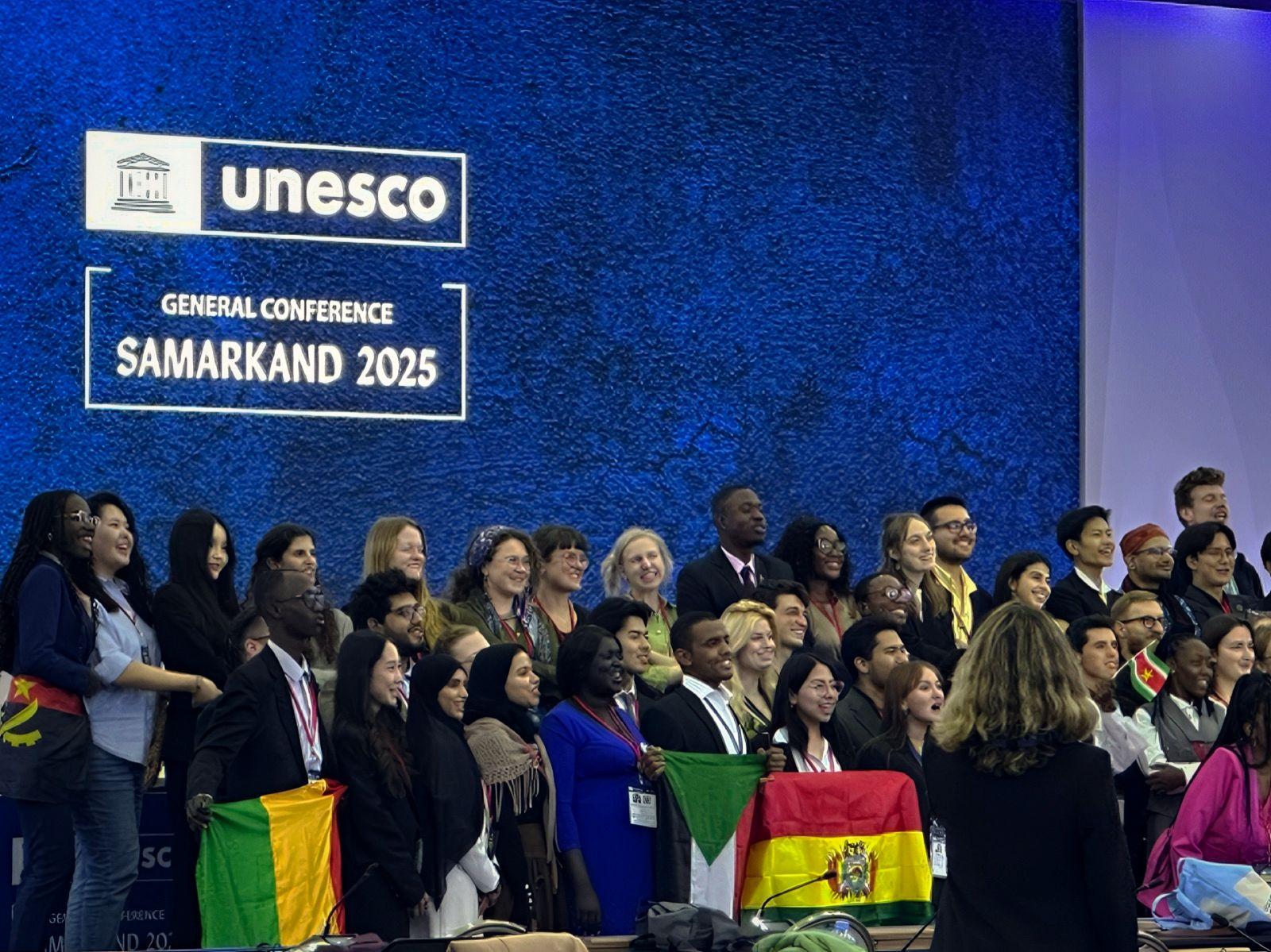
For the first time since 1985, the General Conference met outside Paris
One session, one row: the conference’s scale on the left, what we ran on the right.
2025
43rd session · 30 October – 13 November
Samarkand, Silk Road Samarkand venue. Interpretation into the 6 UN languages and Uzbek.
Event scale
- UNESCO member states
- 194
Our production
- interpretation channels
- 7
- crew on site
- 22
Conference scale from UNESCO. Our figures cover every day of the session.
Our part
What we did: video, screens and interpretation in every delegate’s hand
Our zone at the conference: our own equipment and our own engineer at every desk. What other teams of the general contractor installed, we say plainly.
Our own
Video direction in the halls
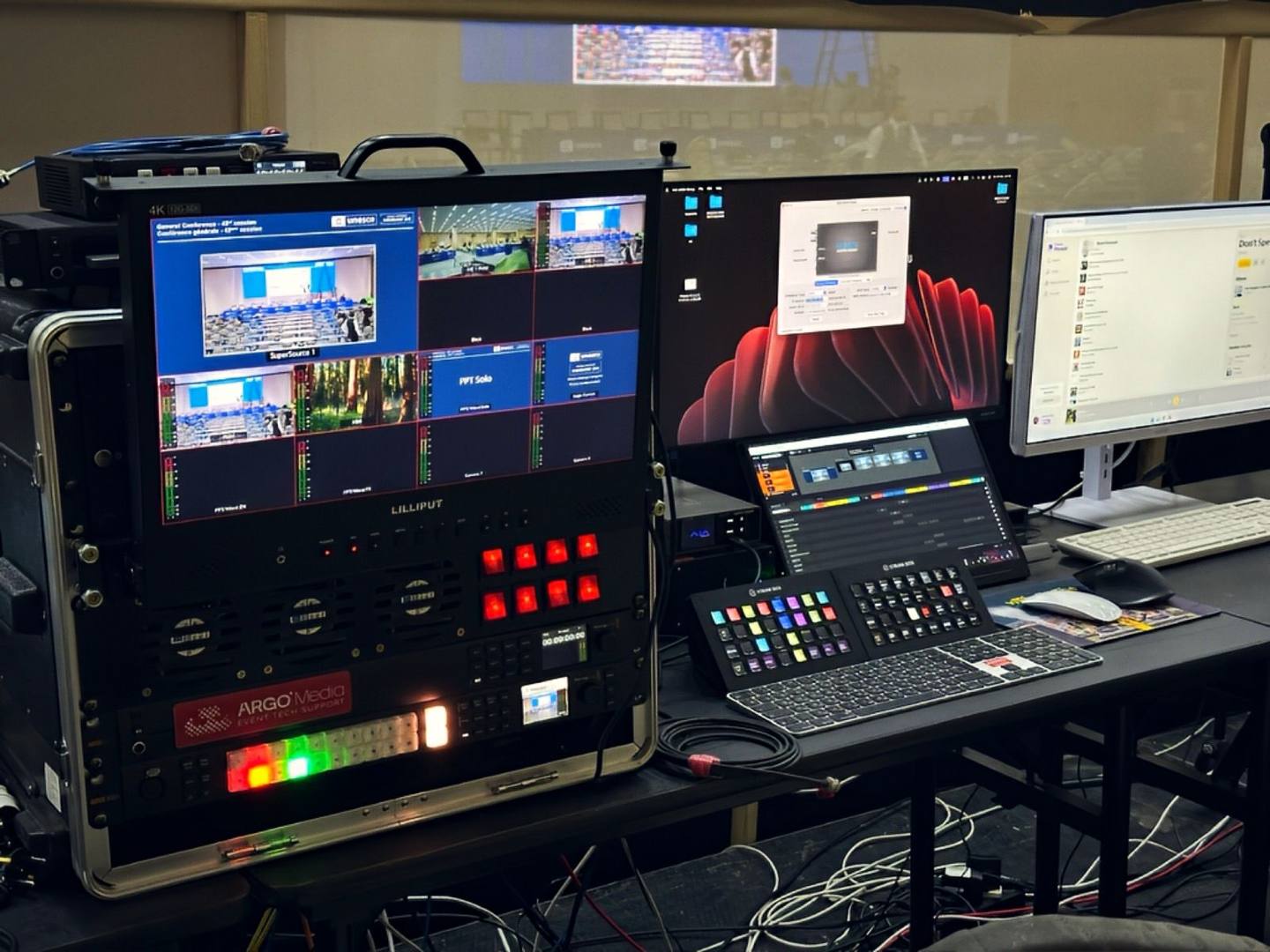
A control room per hall: cameras, multiview, shot switching. Switcher, recording and monitors are built into a mobile control room in a flight case.
Blackmagic ATEM · HyperDeck · Videohub 20×20
Our own
Screen output
The picture on the hall screens: the speaker in close-up, presentations, session holding slides. The screens themselves were installed by the general contractor’s partners; the signal and what appeared on them were ours.
Our own
Content on schedule
Presentations, speaker captions and holding slides follow the session timetable, from one session to the next without a blank screen. A second machine with copies of all files takes over in seconds.
Our own
Simultaneous interpretation receivers
Handed out at the hall entrance against a badge, collected after the sessions, charged overnight. A delegate picks the channel of their language and listens all day.
ITC TS-0370
Our own
Engineers on shift
Our engineer at every desk, intercom and radios for the whole crew. One technical lead for our part, in touch with the general contractor every day of the session.
From partners
Sound, lighting, stage and interpreter booths
Installed by other teams of the general contractor. We worked within the shared technical plan and answered for our zone from installation to the last session.
How we prepared
How to keep the technology running when sessions go on every day
A long session is not one run-through but the same morning every day: checks, hand-out, work, collection and charging.
Our part in the shared plan
We surveyed the halls with the general contractor and fitted our part into its technical plan: where the control room goes, where the screen signal comes from, where receivers are handed out.
Installation
2–3 days before opening: hall control rooms, cameras, screen output, hand-out and charging stations, backup power on key nodes.
Run-through
The day before opening, the whole chain: cameras, screens, content, interpretation channels in the receivers. Then every morning, 2 hours before the first session.
Session days
In the morning receivers are handed out at the entrance; in the evening they are collected, checked and put on charge. Speaker presentations by 18:00 the day before.
Recordings
Every camera is recorded separately along with the programme feed. Rough session recordings the same day, edited ones within 3 working days.
Next project
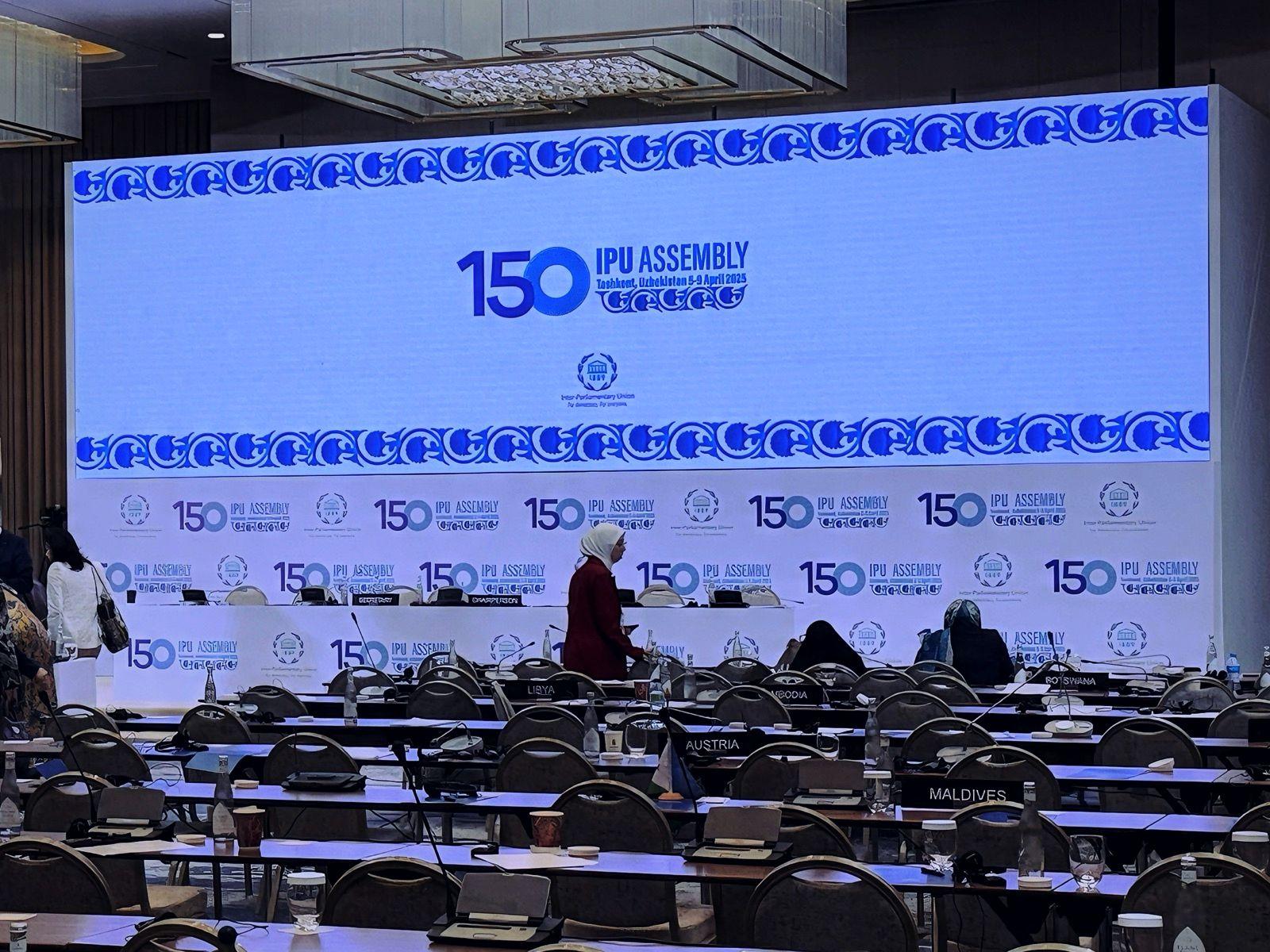
150th Assembly of the Inter-Parliamentary Union
2025 · Tashkent
Video direction of the plenary sittings: speakers in close-up on the hall screens, recording, the signal for the broadcast.
Request
Tell us about your event — we reply within an hour
Anything else — ask at the consultation.