
Service
Live streaming and video direction for events
Online viewers see what the front row sees: the speaker in close-up, the slides and the captions. The cameras, the Blackmagic ATEM Constellation control room and the crew are ours.
- streams at once
- up to 6
- cameras of our own
- up to 14
- cameras per control room
- up to 10
- halls with full direction
- up to 4
Beyond four halls we cover up to four more with basic coverage: a compact switcher and robotic cameras.
Scope
What live streaming includes
Cameras, the control room and the stream are our own. What we take from partners, we say plainly.
Our own
Cameras and operators
Operators on tripods follow the speaker and the hall; the director aims the robotic cameras from the desk. Operators and director share one line: an intercom at every position.
Blackmagic Studio Camera 4K Pro · PTZOptics 4K · Sony PXW-FS5 II
Our own
Control room
A video switcher, a multiview and a director at the desk. The stream shows whoever is speaking, the hall reacting, the slides and captions, not one wide shot all day. For a smaller hall we have a mobile control room in a single flight case.
Blackmagic ATEM 2 M/E Constellation 4K · Videohub 20×20 12G
Our own
Stream for viewers
The finished programme goes to the event website or a video platform. Each hall and each interpretation language gets its own stream.
Our own
Stream for branch offices
Staff watch through a personal link, and the stream never reaches the open internet. After the event you get a report: who watched and for how many minutes.
Our own
Every camera recorded
ISO recording: every camera and the programme are recorded separately at every event. It insures the stream and gives material for editing.
Blackmagic HyperDeck Studio HD Plus · HyperDeck Studio HD Pro · Atomos Shogun Inferno
From partners
Extra positions and satellite
Camera positions with operators beyond our own stock, a camera crane, a Steadicam and a satellite link come from partners to our plan. Our director runs them.
How it works
How the stream reaches the viewer
One signal from the camera by the stage to the viewer screen, built and run by our crew.
Cameras
Operators shoot the speaker and the hall. The hall sound from the sound engineer desk arrives there too.
Control room
The director sees every source on the multiview and builds the programme: who is speaking, how the hall listens, what is on the slide.
Captions
Over the picture: the speaker name and title, bumpers between sessions. The same picture can go to the hall screens.
Encoder
The programme becomes a stream and goes online; the streaming engineer watches the quality until the end.
Viewer
Watches on the event website, a video platform or through a personal link: the same picture the hall saw.
Projects
Where our video direction has worked
An assembly of 129 parliaments and every Tashkent investment forum since the very first.
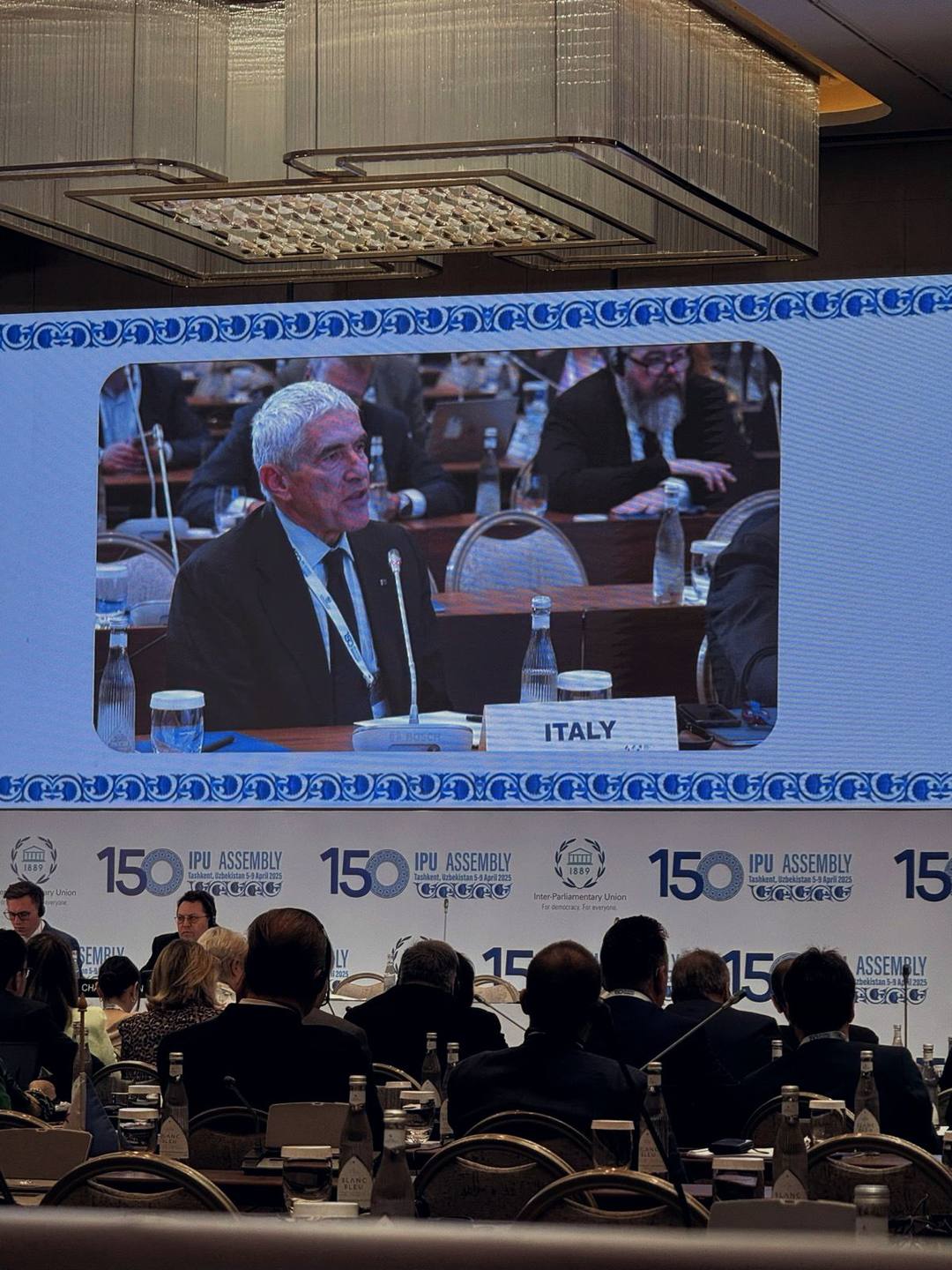
Photo: speaker on screen, 150th Inter-Parliamentary Union Assembly, Tashkent, 2025 2025 · Tashkent
150th Assembly of the Inter-Parliamentary Union
We ran video direction of the plenary sittings: speakers in close-up on the hall screens with country captions, recording and the feed for the broadcast.
- cameras in two halls
- 8
- hours recorded
- 40+
- days
- 5
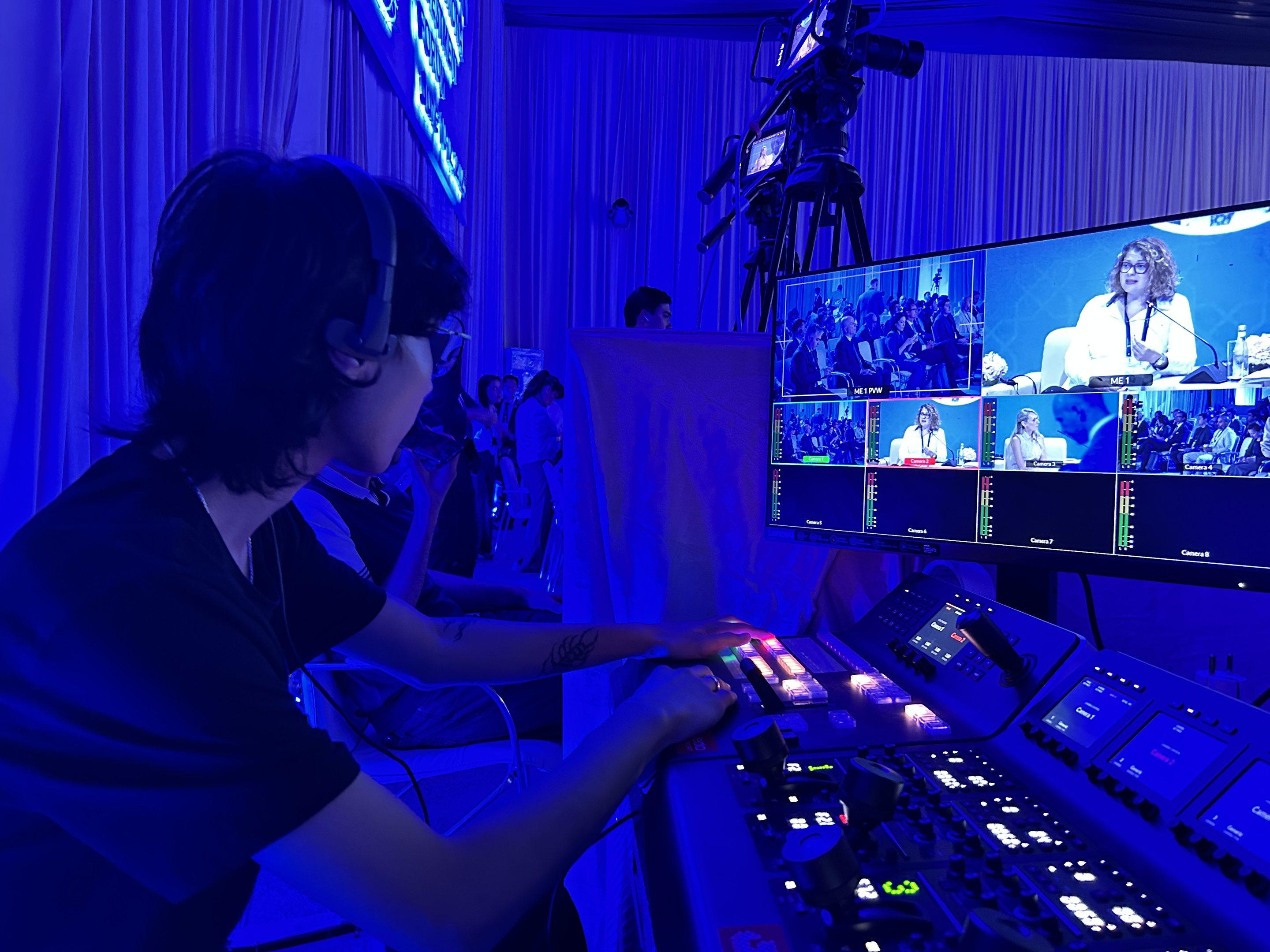
Photo: control room, Tashkent International Investment Forum, 2025 2022–2026 · Tashkent
Tashkent International Investment Forum
Every year since 2022: direction of the halls, streams of the plenary session and the Foreign Investors Council.
- cameras in 2026
- 16
- halls in 2026
- 6
- forums in a row
- 5
Questions
Questions about live streaming
What people ask before the first call.
How many cameras does a conference need?
We count them at the site visit, against your programme: at least a wide shot, a close-up of the speaker and the hall during questions. A panel discussion or guests coming on stage adds positions.
What if the internet goes down?
The stream runs over two channels, the venue internet and a backup LTE line, plus a backup encoder. The venue needs a wired connection with at least 20 Mbit/s upload per stream.
Will the stream carry simultaneous interpretation?
Yes. The interpretation channels go into the stream over Dante: an online viewer picks a language just like a delegate in the hall.
We have our own film crew. Can we combine?
Yes. We take the signal of a third-party crew and bring it into our direction: it goes to the stream and the recording on a par with our cameras.
When do we get the recordings?
Rough cuts on the day of the event, edited ones within 3 working days. For captions, send the speaker list in our template 48 hours ahead; the control room needs a 3×2 m spot at the back of the hall with a view of the stage.
Do you only film conferences?
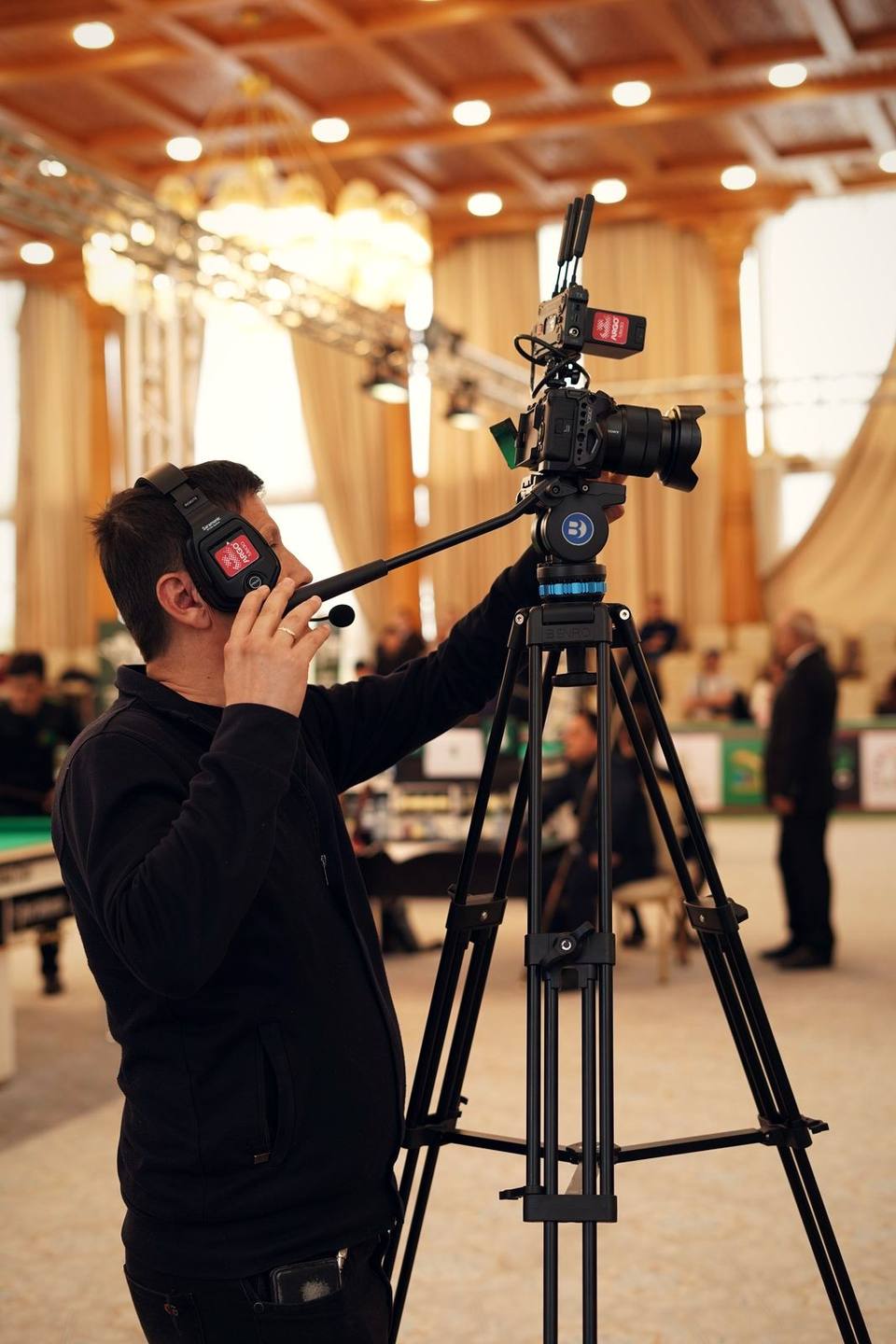
No. For example, we ran a multi-camera stream of a snooker tournament: 6 cameras at the tables, two tables live at once, a multiview and score graphics.
Request
Tell us about your event — we reply within an hour
Anything else — ask at the consultation.